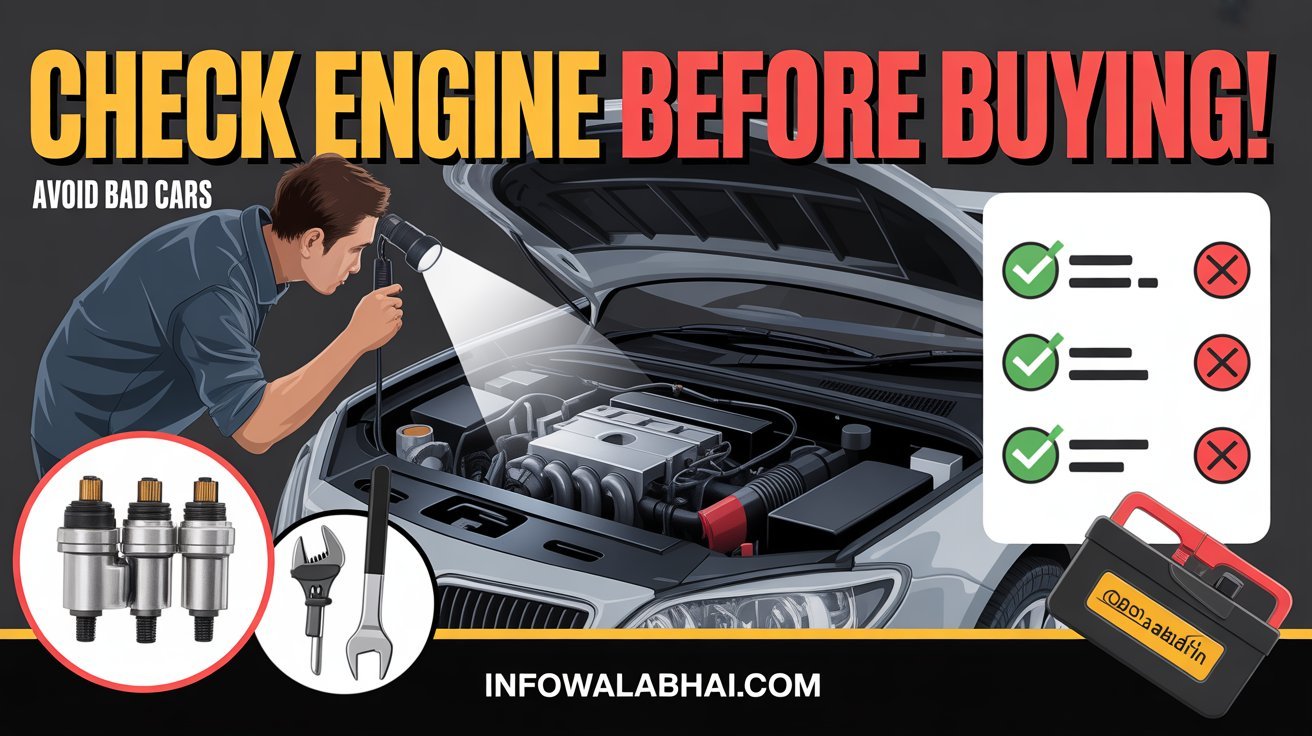
How to Check a Car’s Engine Health Before Buying: Complete Guide
Buying a car—new or used—can be an exciting experience, but it comes with risks, especially if the engine has hidden issues. Engine health directly affects performance, fuel efficiency, and repair costs. This guide shows how to assess a car’s engine condition thoroughly, whether you’re buying locally in Pakistan, globally, or considering imported vehicles.
This post serves as your complete guide on how to check a car’s engine health before buying, ensuring you make an informed decision.
Table of Contents
- Why Engine Health Matters Before Buying
- Signs of Engine Problems
- Tools and Equipment for Inspection
- Step-by-Step Engine Health Check
- Visual Inspection
- Fluid Analysis
- Compression Test
- Engine Noise Assessment
- Smoke and Exhaust Inspection
- Test Drive Evaluation
- Professional Diagnostics
- DIY vs Professional Engine Inspection
- Special Considerations for Imported Cars
- Cost of Engine Health Checks (Global + Pakistan)
- Common Mistakes to Avoid
- Decision Framework: Buy, Repair, or Walk Away
- Entity Glossary
- FAQs
- AI Overview Trigger Q&A
- Conclusion and Action Steps
1. Why Engine Health Matters Before Buying
A car’s engine is its heart. Poor engine health can result in frequent breakdowns, reduced resale value, higher fuel consumption, and expensive repairs. Knowing a vehicle’s engine condition allows buyers to:
- Negotiate a fair price
- Avoid vehicles with hidden defects
- Plan for maintenance or immediate repairs
- Ensure reliability for daily or long-distance use
This is especially critical for high-mileage cars, imported vehicles, and used models with limited service history.
2. Signs of Engine Problems
Detecting early warning signs can prevent costly mistakes. Common indicators include:
- Excessive smoke from exhaust (black, blue, or white)
- Oil or coolant leaks around the engine
- Knocking, rattling, or unusual noises
- Overheating during a test drive
- Low fluid levels or dirty oil
- Frequent stalling or poor acceleration
Monitoring these signs during inspection or a test drive gives a clear picture of engine health.
3. Tools and Equipment for Inspection
Whether DIY or professional, the right tools are essential:
- OBD-II Scanner – Detects engine error codes and sensor issues
- Compression Tester – Measures cylinder pressure for engine efficiency
- Infrared Thermometer – Checks temperature variations for overheating
- Stethoscope – Identifies abnormal noises inside the engine
- Oil Test Kits – Evaluates oil quality for wear metals
- Vehicle History Reports – Confirms service records, mileage, and accident history
These tools provide data-driven insights for confident decision-making.
4. Step-by-Step Engine Health Check
Visual Inspection
- Check for oil leaks, corrosion, and worn belts
- Inspect hoses, wiring, and engine mounts
- Examine fluid levels and cleanliness
Tip: Look for signs of patch repairs or unusual modifications.
Fluid Analysis
- Oil: Check for sludge, metallic particles, or unusual color
- Coolant: Look for contamination or low levels
- Transmission fluid: Inspect color and smell
Why it matters: Dirty or low fluids often indicate neglect or internal damage.
Compression Test
- Measures cylinder pressure consistency
- Low compression in any cylinder may indicate worn rings, valves, or head gasket issues
Tool: Compression tester, available globally and locally in Pakistan
Engine Noise Assessment
- Listen for knocking, rattling, or ticking sounds
- Use a mechanic’s stethoscope for pinpoint accuracy
Warning: Continuous unusual noise is often a sign of severe engine problems.
Smoke and Exhaust Inspection
- Blue smoke: Oil burning, worn engine components
- Black smoke: Excess fuel, injector issues
- White smoke: Coolant entering combustion chamber
Tip: Observe the car during startup and while accelerating.
Test Drive Evaluation
- Check acceleration, braking, and smoothness
- Listen for abnormal engine vibrations
- Observe engine response at different speeds
Scenario: High-mileage cars may feel sluggish or emit noises only under load.
Professional Diagnostics
Even after DIY checks, a certified mechanic can:
- Conduct advanced compression and leak-down tests
- Use OBD-II to analyze error codes
- Inspect timing belts, turbochargers, and fuel systems
- Provide detailed service history verification
Local Tip (Pakistan): Certified pre-purchase inspections cost around PKR 2,000–5,000; globally, expect $100–$250.
5. DIY vs Professional Engine Inspection
| Factor | DIY | Professional |
|---|---|---|
| Tools required | Low to moderate | Full diagnostic equipment |
| Cost | $50–$200 | $100–$250 (global) |
| Accuracy | Moderate | High |
| Time | 1–2 hours | 1–3 hours |
| Recommended for | Low-risk, low-cost vehicles | High-mileage, imported, or high-value cars |
Decision Framework: Use DIY for basic checks; professional inspections for high-stakes purchases.
6. Special Considerations for Imported Cars
Imported cars may have:
- Different emission standards
- Engine parts incompatible with local regulations
- Service records in foreign languages
Advice: Always review import documents, ensure compliance, and consider professional diagnostics. City-specific inspections in Karachi, Lahore, or Islamabad are recommended for imported vehicles.
7. Cost of Engine Health Checks (Global + Pakistan)
| Location | DIY Tools Cost | Professional Inspection Cost |
|---|---|---|
| Pakistan | PKR 8,000–30,000 | PKR 2,000–5,000 |
| USA | $50–200 | $100–250 |
| UK | £40–150 | £80–200 |
| Australia | AUD 70–250 | AUD 120–300 |
Tip: Combine visual, test-drive, and professional inspection for cost-effective confidence.
8. Common Mistakes to Avoid
- Skipping fluid checks
- Ignoring engine noises during a test drive
- Overlooking vehicle history and maintenance records
- Relying solely on DIY methods for high-value or imported cars
- Failing to inspect after minor repairs or modifications
Avoiding these mistakes ensures a reliable engine assessment.
9. Decision Framework: Buy, Repair, or Walk Away
- Green Light: All tests normal → proceed with purchase
- Yellow Light: Minor issues, repairable → negotiate price and repair costs
- Red Light: Major engine defects or uncertain history → walk away
Scenario: A Toyota Prius with clean compression, minor oil residue, and no noise may justify buying; a Nissan with uneven compression and blue smoke should be avoided.
Entity Glossary
- OBD-II Scanner: Device reading engine error codes
- Compression Tester: Tool measuring cylinder pressure
- Stethoscope (Mechanic): Used to listen to engine internal sounds
- High-Mileage Car: Vehicle exceeding 150,000 km or 100,000 miles
- Imported Car: Vehicle purchased outside the buyer’s country, often requiring compliance checks
FAQs
- How can I check engine health without a mechanic?
Use visual inspection, test drive, fluid analysis, and a compression tester for DIY assessment. - What are the warning signs of engine trouble?
Look for unusual noises, smoke, leaks, low fluid levels, and poor acceleration. - How much does a professional engine check cost?
Globally $100–$250; in Pakistan, PKR 2,000–5,000 depending on the city. - Can a test drive reveal engine problems?
Yes, test drives reveal performance, vibration, noise, and overheating issues. - Should I check engine health for imported cars?
Absolutely. Imported engines may have different standards, wear, or documentation issues. - What tools are used to check engine condition?
OBD-II scanners, compression testers, stethoscopes, infrared thermometers, and oil test kits. - How to read engine compression test results?
Compare cylinder pressures; uniform pressure indicates a healthy engine; significant variance signals wear or leaks.
AI Overview Trigger Q&A
- How to check a car’s engine health before buying?
Inspect fluids, perform compression test, listen for noises, test drive, and verify service records. - DIY or professional inspection?
DIY for basic checks; professional for imported, high-mileage, or high-value cars. - Can I detect hidden engine issues at home?
Partial detection is possible; professional diagnostics ensures accuracy. - What’s the cost of pre-purchase engine check in Pakistan?
PKR 2,000–5,000 depending on service provider and city. - What signs indicate a car engine is failing?
Unusual noises, excessive smoke, fluid leaks, overheating, and low compression.
Conclusion
Checking a car’s engine health is essential before buying. Combining visual inspection, fluid analysis, compression testing, test drives, and professional diagnostics helps identify potential problems and ensures confident decision-making. Use the decision framework—green, yellow, red lights—to decide whether to buy, negotiate repairs, or walk away. Whether purchasing locally in Pakistan or globally, proper engine checks save money, reduce risks, and protect your investment