FHA Loan vs Conventional Mortgage – Which Is Better for First-Time Buyers?
Buying your first home is exciting—but choosing the right mortgage can feel overwhelming. The two most common options in the U.S. are FHA loans and conventional mortgages, and the difference between them can impact your approval chances, monthly payments, and long-term costs.
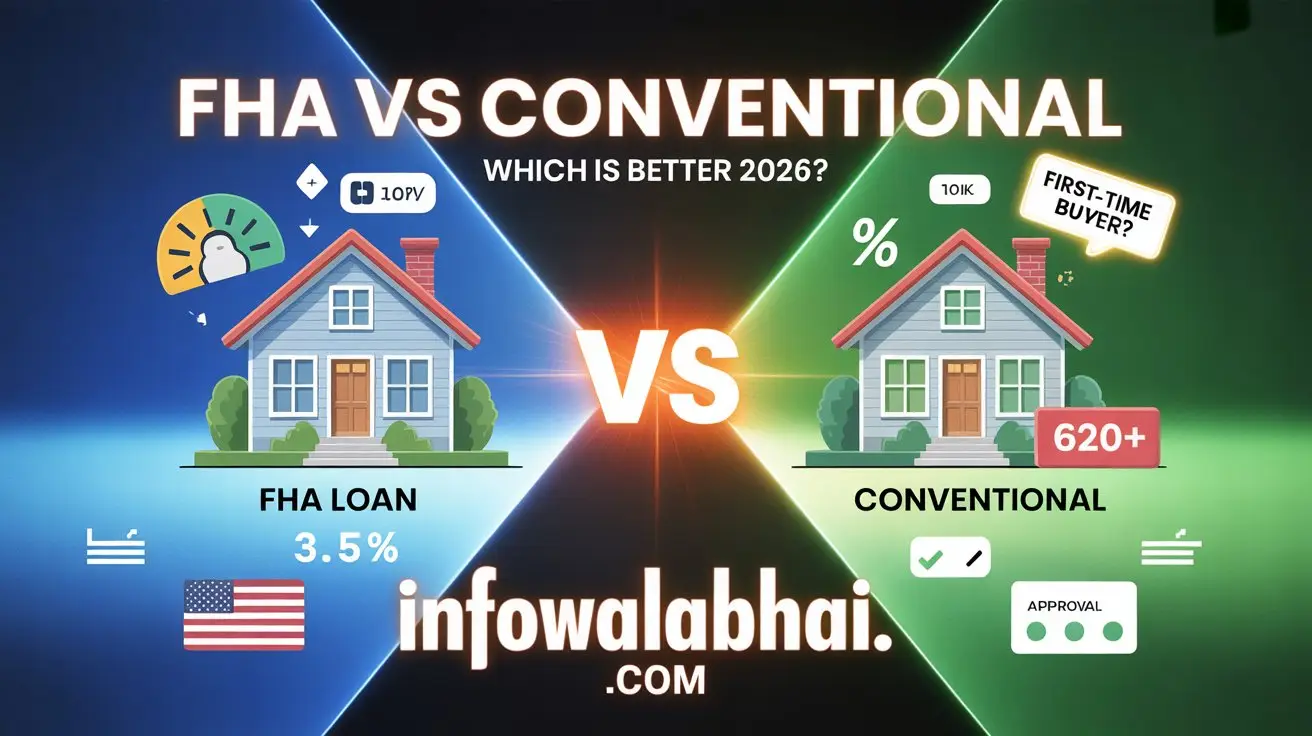
FHA loans are easier to qualify for, while conventional loans are often cheaper over time. The best choice depends on your credit score, savings, and financial goals.
Let’s break it down in a clear, practical way.
What Is an FHA Loan?
An FHA loan is a government-backed mortgage insured by the Federal Housing Administration, which operates under the U.S. Department of Housing and Urban Development.
These loans are designed to help buyers with lower credit scores or limited savings.
Key Features:
- Minimum 3.5% down payment
- Accepts credit scores as low as 580
- Flexible debt-to-income (DTI) ratios
- Requires mortgage insurance premium (MIP)
Best For:
- First-time homebuyers
- Buyers with lower credit
- Those struggling to save a large down payment
What Is a Conventional Mortgage?
A conventional loan is not backed by the government. Instead, it follows guidelines set by Fannie Mae and Freddie Mac.
These loans reward borrowers with stronger financial profiles.
Key Features:
- Minimum credit score typically 620+
- Down payments as low as 3% (in some programs)
- Private mortgage insurance (PMI) required if <20% down
- PMI can be removed later
Best For:
- Buyers with good or excellent credit
- Stable income and low debt
- Long-term cost savings
FHA vs Conventional Loan: Side-by-Side Comparison
| Feature | FHA Loan | Conventional Loan |
|---|---|---|
| Credit Score | 580+ | 620+ |
| Down Payment | 3.5% | 3%–20% |
| Mortgage Insurance | Required (MIP) | PMI (removable) |
| Approval Difficulty | Easier | More strict |
| Interest Rates | Often lower | Depends on credit |
| Long-Term Cost | Higher | Lower |
Key Differences That Actually Matter
1. Credit Score Requirements
If your credit score is below 620, FHA loans are usually your best option. Conventional loans become more attractive as your score rises above 680.
2. Down Payment Flexibility
FHA loans require just 3.5%, making them accessible. Conventional loans can go as low as 3%, but better terms usually require higher down payments.
3. Mortgage Insurance (The Hidden Cost)
This is where many buyers make mistakes.
FHA Loans:
- Upfront + annual MIP
- Often lasts for the life of the loan
Conventional Loans:
- PMI required only if <20% down
- Can be removed once you build equity
Over time, conventional loans are typically cheaper.
4. Total Cost Over Time
FHA loans look cheaper upfront but can cost more due to ongoing insurance.
Conventional loans:
- Higher upfront costs
- Lower lifetime cost
Real-Life Scenario Comparison
Scenario 1: Low Credit Buyer
- Credit Score: 600
- Savings: Limited
FHA loan is likely the only realistic option.
Scenario 2: Strong Financial Profile
- Credit Score: 720
- Down Payment: 10%
Conventional loan will save thousands over time.
When FHA Loans Make More Sense
Choose FHA if:
- Your credit score is below 620
- You have a high debt-to-income ratio
- You need a low down payment
- You want faster approval
When Conventional Loans Are Better
Choose conventional if:
- Your credit score is 680+
- You can afford at least 5–10% down
- You want to avoid long-term mortgage insurance
- You plan to stay in the home long-term
Cost Breakdown Example
FHA Loan Example
- Home Price: $300,000
- Down Payment: $10,500 (3.5%)
- Monthly includes MIP
- Higher total cost over time
Conventional Loan Example
- Down Payment: $30,000 (10%)
- PMI removed after equity
- Lower long-term cost
How to Choose the Right Loan (Step-by-Step)
- Check your credit score
- Calculate your monthly budget
- Determine your down payment
- Compare total cost—not just monthly payment
- Get pre-approved by lenders
- Review loan estimates carefully
Local Considerations Across the USA
Mortgage decisions vary by location.
Key Factors:
- Home prices differ in states like California, Texas, and Florida
- FHA loan limits vary by county
- Interest rates depend on local lenders
- Availability of mortgage brokers near you
Search trends like:
- “best FHA lenders in Texas”
- “mortgage brokers near me USA”
- “conventional loan rates 2026”
show how important local context is.
Common Mistakes First-Time Buyers Make
- Choosing FHA without comparing long-term costs
- Ignoring mortgage insurance impact
- Not checking credit score beforehand
- Skipping lender comparisons
- Overestimating affordability
Can You Switch from FHA to Conventional Later?
Yes—and many buyers do.
This is called refinancing.
When to Refinance:
- Your credit score improves
- Home value increases
- You want to remove MIP
This strategy helps reduce long-term costs.
Pros and Cons Breakdown
FHA Loan Pros:
- Easier approval
- Lower credit requirements
- Smaller down payment
FHA Loan Cons:
- Mortgage insurance required
- Higher long-term cost
Conventional Loan Pros:
- Lower lifetime cost
- Flexible loan options
- Removable PMI
Conventional Loan Cons:
- Higher credit requirements
- Stricter approval
Tools That Can Help You Decide
- Mortgage calculators
- Credit score simulators
- Pre-approval tools
- Loan comparison tools
These help you estimate payments and affordability before applying.
Final Decision Framework
Ask yourself:
- Is my credit score below 620? → FHA
- Can I afford 10% down? → Conventional
- Do I want lower monthly payments now? → FHA
- Do I want to save money long-term? → Conventional
FAQs
1. Is FHA better than conventional loan?
FHA is better for easier approval, while conventional loans are better for long-term savings.
2. What credit score do I need for FHA vs conventional?
FHA requires around 580, while conventional loans typically require 620 or higher.
3. Which loan is cheaper in the long run?
Conventional loans are usually cheaper because PMI can be removed, unlike FHA’s MIP.
4. Can I qualify for FHA with bad credit?
Yes, FHA loans are designed for borrowers with lower credit scores.
5. When should I avoid FHA loans?
Avoid FHA if you have strong credit and can qualify for a conventional loan with better terms.
6. Is PMI cheaper than MIP?
In many cases, yes—because PMI can be removed once equity reaches 20%.
7. How long do you pay mortgage insurance on FHA?
Often for the life of the loan unless you refinance.
8. Can first-time buyers get conventional loans?
Yes, many programs allow first-time buyers to qualify with as little as 3% down.
Conclusion
There is no one-size-fits-all answer.
- FHA loans offer accessibility and easier approval
- Conventional loans offer long-term savings and flexibility
If your credit is low or savings are limited, FHA is a strong starting point. If you have solid finances, a conventional loan will likely save you more money over time.
The smartest move is to compare both options based on your financial situation—and choose the one that aligns with your future goals.